
Congratulations on your purchase of Heavy Grips™ hand grippers!
In this article I’m going to show you some tips, tricks, techniques, pictures, and videos to help you get the most out of your grippers and develop stronger hands, as well as give you a sample training program based off of my own program which I have been using with good results.
Out of all my grip toys, I like my grippers the most because I can take them anywhere and I love to watch the expression on people’s faces when they try them. These are not your ordinary grippers that you can squeeze all day!
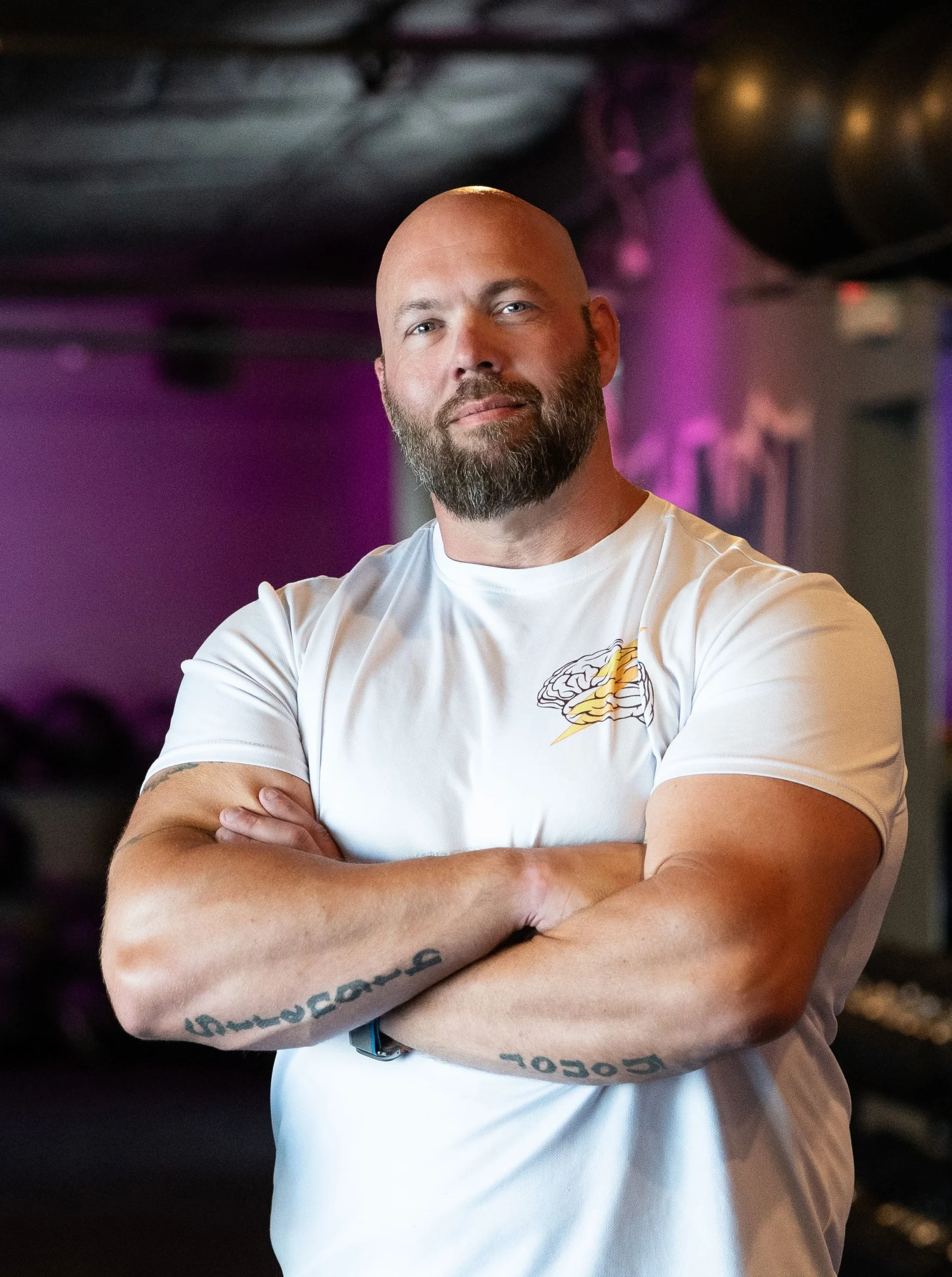
If you’re an athlete, you need strong hands. Nearly every sport in the world involves moving something with your hands or transferring your body’s power through the hands. Developing stronger lower arms will help you in any athletic endeavor you aspire to do. Football, wrestling, baseball, weightlifting, martial arts, and yes, even golf all rely on a high degree of lower arm strength and working with grippers is a key element of that.
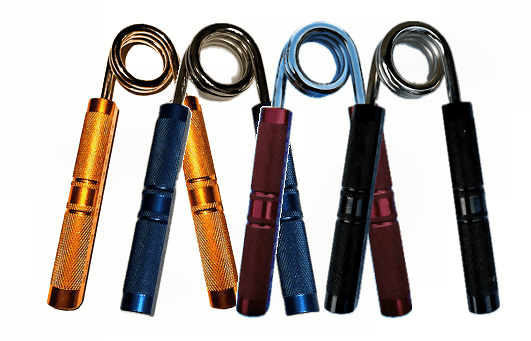
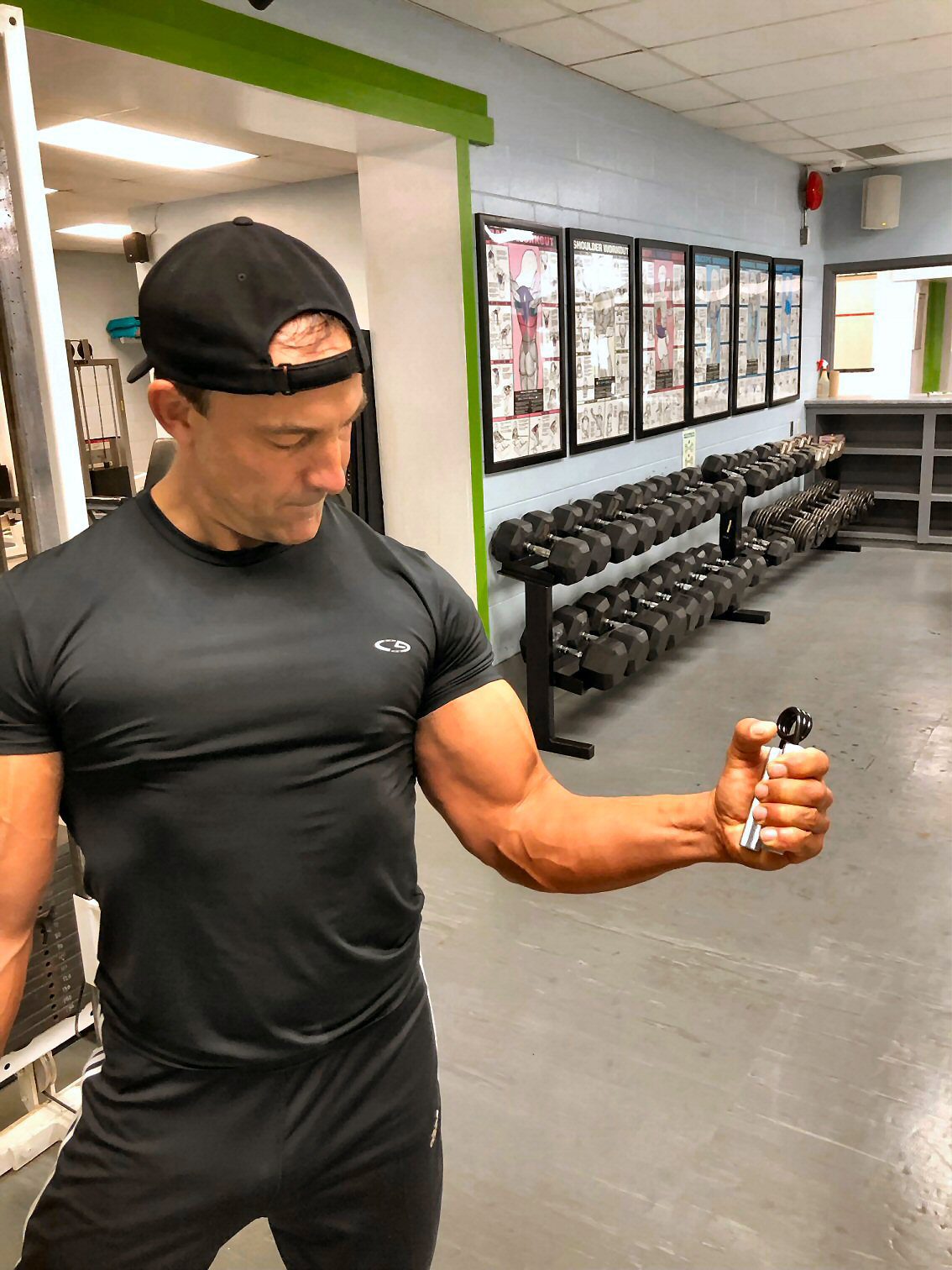
“Setting” the gripper basically means that you are using your other hand to help position the gripper in your hand. You are also closing the gripper far enough so that you can wrap your pinky around the handle and put it in a good position to close the gripper. It may take you a few days or a few weeks to completely grasp the “feel” of setting the gripper but once you do you will reap the benefits immediately. You will soon find a ‘sweet spot’ in your palm for the handle to rest. That allows you to get the best possible leverage. When I set a gripper in my right hand, I use my left thumb to press one gripper handle firmly into my right palm, while at the same time using my left index finger to pull the other handle closer so my pinky can wrap around it better. Despite having 8” long hands, I have relatively short fingers and don’t have an easy time closing grippers without a set. See Figures 1 and 2 below, and Figure 3 of the “set” gripper.
Under no circumstances would you want to set the gripper any further than parallel. That is, you don’t want to use your other hand to help you squeeze it so far that the handles are nearly parallel with each other like in Figure 4. It makes the rest of ‘the close’ easier because you can get some added leverage. Why not do it then, if it’s easier? Because it doesn’t develop stronger hands, and didn’t you buy the grippers to develop stronger hands in the first place?
If you want to develop truly strong hands, work on using a very shallow set and practicing ‘no-set’ closes. ‘No-set’ means you don’t use the other hand to set the gripper at all and you squeeze the gripper completely closed using one hand only. These types of squeezes are much tougher and will make your hands strong. But if you don’t have large hands, this can be difficult. Figure 5 is a video of a no-set close of the HG300. However, don’t use hand size as an excuse for you not to use ‘no-set’ closes in your training. If you can no-set close the HG100, then you have the hand size to no-set close the HG150, 200, 250, and 300. All feats of grip strength rely on hand strength, not hand size. One of the unique things about Heavy Grips™ is that all the grippers have a standard handle spread of 2.5”, allowing more people to be able to close the gripper with a shallow set or no set at all.
Select a Heavy Grip model that you can close for 3 to 5 repetitions. Continue training with this resistance until you can perform 8 to 12 controlled repetitions. Once this target range is achieved, progress to the next heavier gripper to ensure continuous strength development.
Perform grip training 2 to 3 times per week, allowing at least one rest day between sessions. Adequate recovery is essential for muscle growth and tendon health. If your hands are still sore, wait until they are fully healed before training again. This might mean only training once a week until you get more experienced.
Begin each training session with a comprehensive warm-up to prepare your hands, wrists and forearms. Open and close your hands for approximately one minute. Perform additional dynamic hand and wrist exercises as recommended to improve circulation and mobility.
Use a gripper that is challenging to close. Use your other hand to assist in closing the gripper fully and try to hold the fully closed position for one to two seconds. Slowly resist the opening phase over 6 to 8 seconds, maintaining full control. Immediately attempt to close the gripper again with maximum effort and repeat for the desired number of repetitions.
Limit maximum-effort (one-rep max) testing to prevent over-training. Focus primarily on moderate to high-repetition sets to build both muscular strength and endurance.
Incorporate additional grip-strengthening exercises such as: -Rope Climbing -Farmer’s walk (carrying dumbbells) -Dead hangs (hanging from a bar- add weight if possible) -Wrist curls (off knees and behind back) -Paper crunching- Take a full sheet of news paper and crumple it up into a small ball only using one hand using all your fingers. These training movements will enhance overall grip and forearm development, contributing to balanced strength.
Always ensure proper hand positioning and body engagement: Set the gripper deep in the palm for maximum leverage. Maintain tension through your entire body to direct power into your grip. Apply this principle to other exercises, including dead hangs and carries, to optimize performance and reduce injury risk.
Listen to your body: Grippers are designed to be hard. Expect to work hard and feel sore, especially when you start, but avoid pushing through sharp pain. Don’t neglect other grips: While Heavy Grips are great for crushing strength, remember to balance your grip training with other exercises as noted above.